Hip thrusts - the best exercise for your glutes
Hip thrusts on a machine build strong glutes, but only with good technique. We show you how to set up the machine, how to perform the movement and which mistakes to avoid.
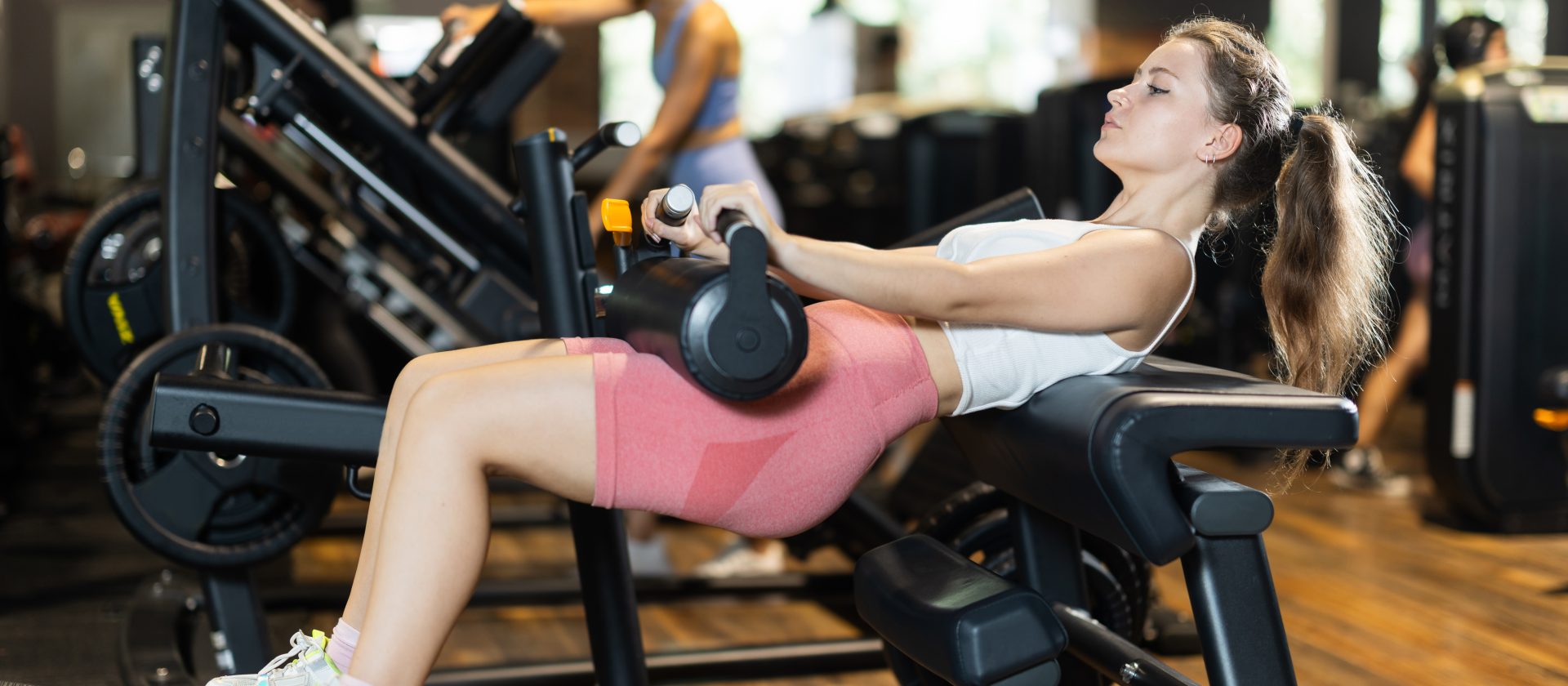
Well-shaped, strong glutes are a goal for many women and men. Did you know that RIO TOP GYM has a great machine for training them? Hip thrusts, or hip raises against resistance, are an absolute classic and one of the best exercises for building strong, shapely glutes. Although the traditional barbell version has plenty of fans, modern training machines have revolutionised this exercise. They allow powerful muscle isolation without wrestling with the bar, hunting for a free bench or painful pressure on your hip bones.
However, the fact that the machine guides you along a stable path does not automatically mean you cannot make mistakes on it. Poor technique can quickly shift the load onto your lower back. Here is a complete guide that explains step by step how to train correctly on this machine.
Step 1: the perfect setup (before you start)
Before you set a heavy weight, you need to adjust the machine precisely to your body. This is the key moment that decides which muscles will do most of the work.
- Back support: Lean against the back pad so that its top edge sits just below your shoulder blades. The pad must not press on your neck or sit too low towards your lower back.
- Foot position: Place your feet on the platform hip-width apart (or slightly wider, with your toes turned slightly out). The most important rule: at the top of the movement your shins must be vertical, forming an angle of about 90 degrees with your thighs. If your feet are too far away, you will feel it more in the back of your thighs (hamstrings). If they are too close - you will engage your quadriceps.
- Belt or roller pad: Pull the safety belt across (or lower the movable roller pad) exactly onto the crease of your hips. It should fit snugly but not restrict your natural range of motion.
Step 2: technique
1. Initial tension (brace) - the starting phase
Place your hands on the machine’s handles (or loosely by your sides). Before you push the weight up, take a deep breath into your belly (brace your core) and gently squeeze your glutes. Your spine must form one rigid line from your head all the way to your pelvis.
2. Driving up - the concentric phase
Press your heels firmly into the platform and start driving your hips up against the machine’s resistance. The movement should be smooth but decisive. Remember the most important thing: you push with your hips, not with the strength of your back or arms.
3. Peak contraction and lockout - the top of the movement
At the top, hold the position for 1 to 2 seconds. Bring your pelvis into a posterior tilt (tuck your tailbone under), which allows maximum contraction of the gluteus maximus. At this point your torso should be parallel to the floor.
4. Controlled return - the eccentric phase
Slowly lower your hips, resisting the machine. Do not just let the weight drop. Go down until you feel a strong stretch in your glutes, but do not let the weight rest completely - this way you keep constant muscle tension throughout the set.
The most common mistakes - what should you watch out for?
1. Overarching the lower back: This is the most common sin in the gym. It means arching your back at the top of the movement to ‘push’ the weight higher. Remember: the movement ends when your glutes are fully squeezed and your hips are extended. Going any higher comes at the expense of your spine.
2. Incorrect head position: Do not tip your head back or look at the ceiling. Your gaze should follow the movement of your torso. In the bottom phase you look straight ahead, at the top - at your knees. Keep your chin lightly tucked towards your chest the whole time.
3. Lifting your heels off the platform: Pushing the weight through your toes drastically reduces the work of your glutes and puts unnecessary strain on your knees. Drive all the force through your heels.
A final word
A hip thrust machine is a brilliant tool that is more forgiving than a free barbell, as long as you respect your body’s anatomy. Focus on a controlled tempo (e.g. 2 seconds up, a one-second pause at the top, 3 seconds down). Training this mindfully will bring you the best results and protect you from unwanted injuries.
Want someone to check your technique? Book a personal training session. Not training with us yet? Try the club with a free pass. Good luck, and see you at RIO TOP GYM in Wrocław!